The future lies in a hybrid model: AI as an ever-present practice partner tailored exactly to your pace, and the human teacher as a mentor for nuance, culture and complex guidance.
Section 1 · My classroom method
Clear, interactive speaking lessons.
Step 1
Shadow Model Answers
Step 2
Plan Own Answer
Step 3
4/3/2 Speaking Circuit
Step 4
Feedback
Step 5
Retry
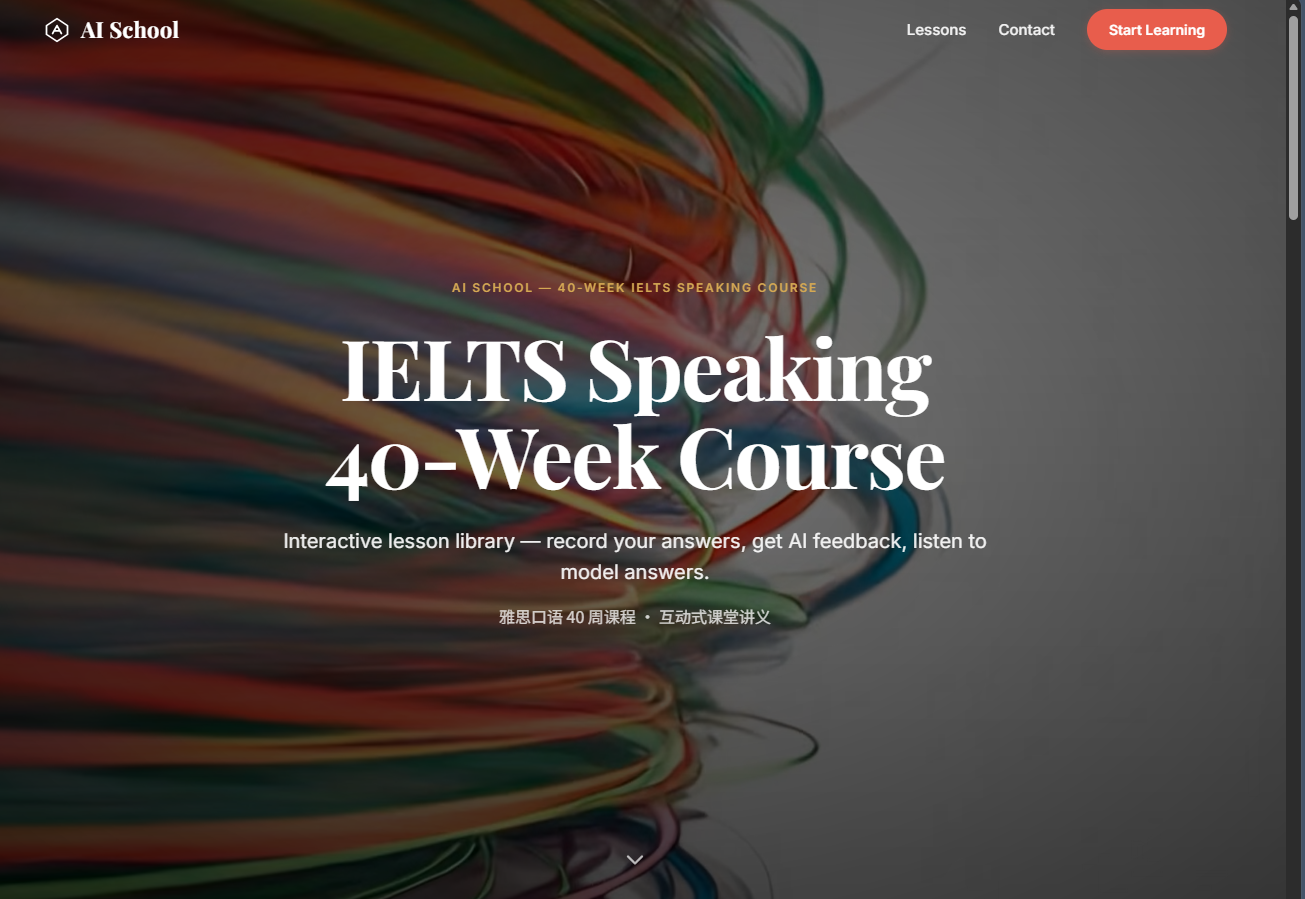
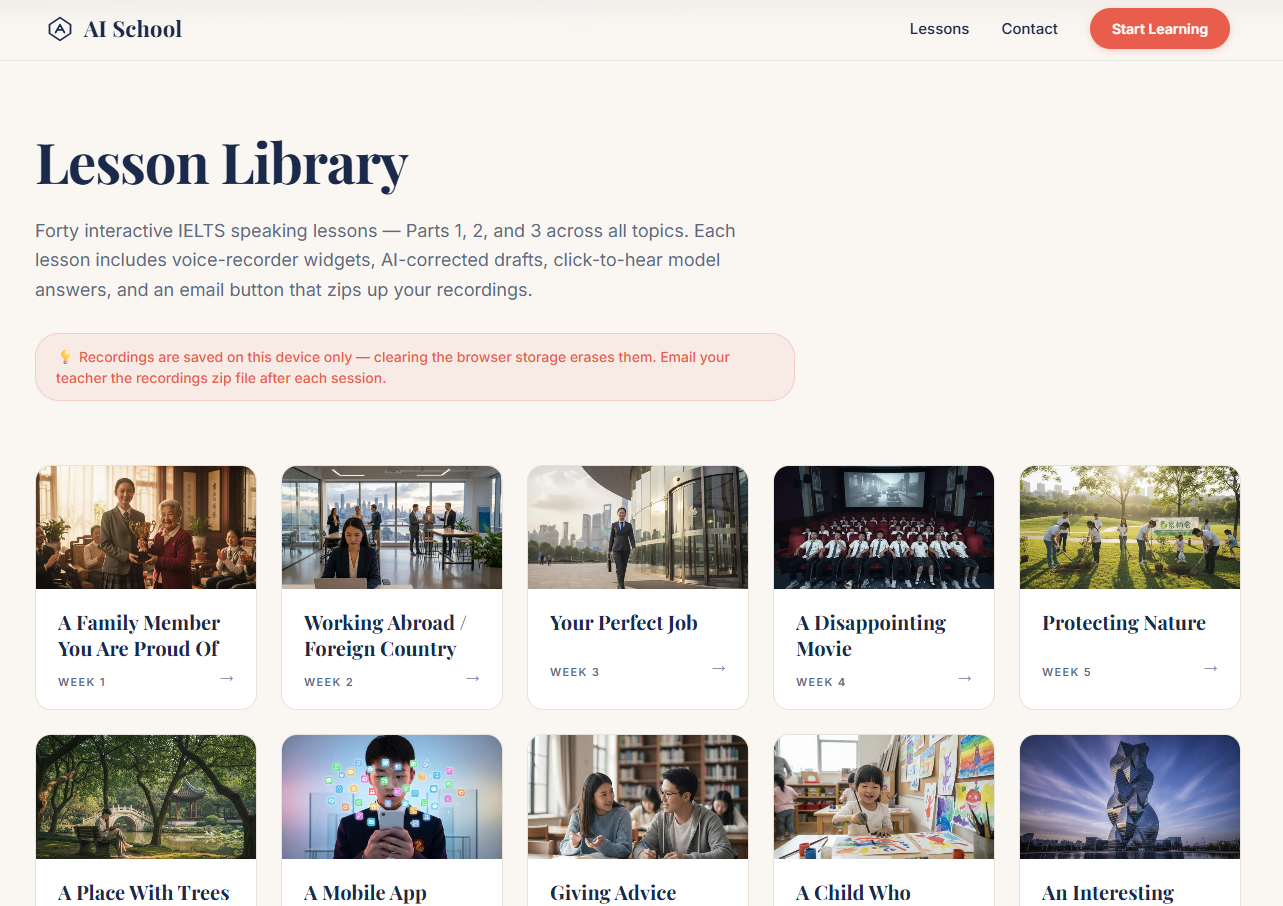
Current build: IELTS Speaking 40-Week Course and Lesson Library. The lesson structure can be adapted for different courses and year groups.
Please click the links below to visit the interactive lessons websites. Password: noa2026
My lessons follow a clear structure. Students receive a question, build an answer, get feedback, improve the answer, and then review what they have learned.
This helps students practise the skills they need most. They learn how to answer clearly, extend their ideas, use better vocabulary, improve grammar, and speak with more confidence.
This lesson structure can be used for different courses, including IELTS Speaking, IGCSE ESL Speaking, IGCSE English, and A-Level English Language. The exam criteria may change, but the teaching method stays clear and practical.
Materials
My classroom materials are:
- 01Created using real assessment criteria, such as IELTS and Cambridge.
- 02suitable for iPads, classroom screens, or printed handouts;
- 03written from the point of view of an experienced examiner;
- 04flexible curriculum that can be refreshed every 6 months.
Section 2 · Differentiation
Built-in differentiation, inside and outside the classroom.
Lessons follow QTS-style principles, with differentiation as a core part of the lesson sequence. The structure gives more support to weaker students and more challenge to stronger students — and the AI extends both pathways beyond the classroom.
Two pathways through the same lesson — both lead to progress, with different levels of scaffolding and challenge.
Support Pathway
For students who need more scaffolding
- ●Model answers for every question
- ●Sentence starters and clear answer structures
- ●Step-by-step support that builds confidence
- ●Reduces cognitive overload
Challenge Pathway
For students ready to stretch
- ●Encouraged to give longer, more complex answers
- ●Idiomatic language from the lesson vocabulary lists
- ●More advanced grammar structures (highlighted in model answers)
- ●Faster pace, greater independence
02 · Two staged courses: IGCSE and IELTS
Two courses are available, both built in stages of gradually increasing difficulty. Because every lesson is also available online, students can practise the difficulty that suits them for homework — stronger students push ahead, weaker students repeat current lessons as many times as they need until they are confident.
IGCSE
IGCSE Course · 40 weeks
Weeks 1–20 build from roughly IELTS Band 5.0 to 5.5, covering all 20 IGCSE textbook chapters. Weeks 21–40 revisit the same 20 chapters at a higher level, moving students from Band 5.5 toward Band 6.0 — a true spiral curriculum.
IELTS
IELTS Course · 40 weeks
Weeks 1–20 take students from roughly Band 5.5 to Band 6.0. Weeks 21–40 push from Band 6.0 to Band 6.5+, preparing strong students for the level required by top universities.
Self-paced homework online
Every lesson is available online, so students can practise the difficulty that suits them for homework. Stronger students move ahead to the next level; weaker students repeat current lessons as many times as they need until they are confident.
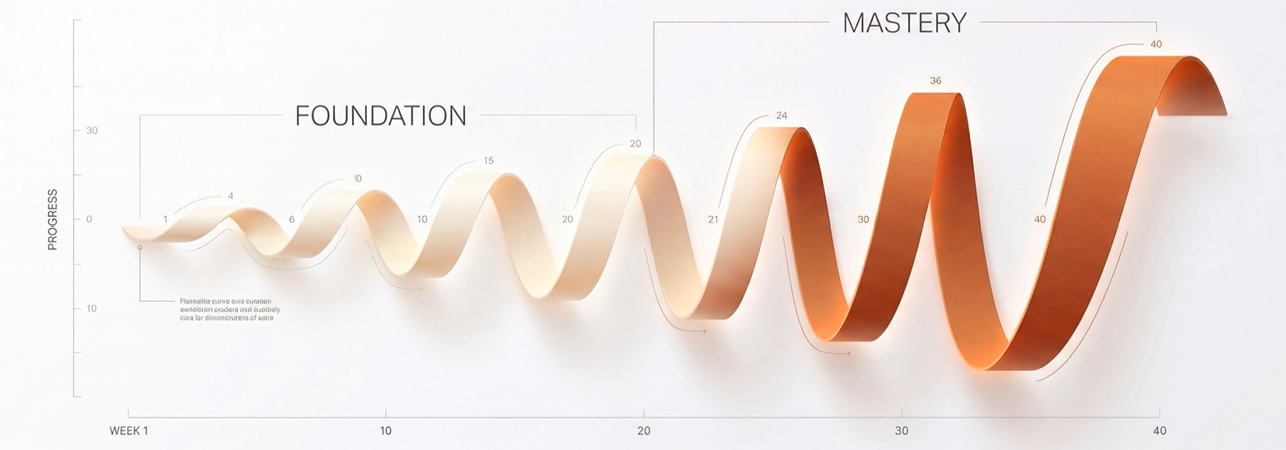
Progression across both courses, from IGCSE foundations to IELTS exam readiness.
03 · Two ways to run the class
Each teacher can choose the classroom model that best fits their students and timetable.
Option A
All-classroom model
The full lesson runs in the regular classroom, led by the teacher with the AI English Teacher displayed on the main screen. Simple to schedule and works in any room.
Option B
Hybrid: classroom + computer lab
Half the lesson runs in the school computer lab so every student gets hands-on pronunciation and fluency practice with the AI; the other half runs in the classroom for discussion and teacher-led work. Ensures all students — not just the confident ones — actually speak.
The point
Two pathways. One classroom.
Supported students reach Band 5.5 with confidence over the full 40 weeks. Faster learners finish the core syllabus early and move straight into the advanced IELTS track — no one waits, no one is left behind.
In language learning, what students do outside the classroom is often just as important as what happens in class. Homework materials are designed to be colourful, interactive, and engaging — increasing the chance students will actually do them, which matters in international schools where homework motivation can be low. Students can answer questions, receive instant feedback, improve, and try again until mastery — without waiting for the teacher.
Mastery Loop
Independent practice continues anytime, anywhere.
05 · No ceiling for strong students
The system also lets stronger learners accelerate. Students ready to move faster can progress through the course more quickly and move on to a more advanced IELTS course — reaching the required language level well ahead of schedule, freeing time for other subjects.
The result is a powerful form of differentiation: an always-on learning environment where students can practise anytime, anywhere, at the level they need. Weaker students receive the support they need; stronger students are free to go as far and as fast as they can.
Ideally, every person learning a language would have a patient, kind tutor they could call up any time to work on their spoken language. AI is making that the way the world works.
Section 3 · The AI English Teacher
A practical tool to support learning.
The AI English Teacher is currently in active development.
Meet Miss Li.
It is designed to give students more practice, more feedback, and more confidence. It can support students in five main ways.

01
Speaking practice
Students answer questions, receive feedback, and practise improving fluency, vocabulary, grammar, and organisation.

02
Writing support
Students receive guidance on clarity, accuracy, structure, and exam focus.

03
Vocabulary review
Students can practise key weekly vocabulary through short review tasks.

04
Exam preparation
The app can deliver mock IELTS and IGCSE-style tests based on the weekly lesson content, so students practise familiar questions in a realistic test format. The AI feedback system has been designed with the support of a former IELTS examiner with over 10 years of examining experience, using British Council examiner training materials.

05
Independent learning
Students can practise at home, on an iPad, or during supervised study time.
The tool can be adapted for the school. Its voice, character, lesson style, and feedback can match your school's English curriculum and academic expectations.
It is not a replacement for teachers. It is a support tool. The teacher still leads the learning, builds the relationship, and makes the key decisions.

The character, voice, and lesson style can be adapted for the school, class, age group, and assessment target.
Personas
The AI Teacher can take on different roles within the school.
The same teaching engine, presented as different personas depending on the audience and need. The character, voice, and tone are swapped while the underlying lesson and feedback engine stays the same.

01
Psychological Counsellor
A warm, calm voice for student wellbeing conversations, pastoral check-ins, and gentle guidance.

02
Student's Friend
A friendly character that lowers the stakes for nervous students and can talk about personal issues in a confidential and non-judgemental way.

03
Business Colleague
A sharper, professional persona for staff development, reports, and academic planning conversations.
Section 4
How it could be used at your school.

1
In the classroom
The AI English Teacher can help during lessons by giving model answers, asking students questions, giving feedback, and helping students understand how to improve.

2
At home
Students can use it for extra speaking, writing, mock testing. This is especially helpful for students who need more repetition or more confidence.

3
In staff development
Teachers can use it to create lesson ideas, give advice on teaching challenges, give reports, and feedback on student performance or personal issues.

4
At parents' events
The AI can take questions from groups of parents about how students are supported in English. Parents can ask the AI teacher about their own child's progress and receive up to the minute reports at any time in any language.

5
Around the school
The AI English Teacher could appear on screens or iPads as part of the school's English learning environment. It could become a friendly and visible part of the school's staff.

6
Teacher support
The app can help teachers with the whole range of teacher administration tasks such as: assigning and automatically marking homework; conducting and scoring monthly tests; producing student performance and progress charts and reports; automatically monitoring problems students communicate to the AI; and keeping parents informed.
Technology will not replace great teachers, but technology in the hands of great teachers can be transformational.
Section 5 · The advantage for the school
A visible innovation with real classroom purpose.
Many schools now talk about AI. Fewer schools can show a practical AI tool that is built by a teacher and connected directly to classroom learning.
This could help your school stand out in a careful and professional way.
The main benefit is better support for students. It is also an opportunity to be among the first schools in Asia to deploy AI technology in this way — and to show parents that your school is serious about innovation, English development, and student progress.
The strongest message is simple:
Your school is using AI carefully, with a real teacher leading the work, to help students improve their English.
That is a message parents, teachers, and students can understand.
“Not AI for show. AI used carefully to support better English learning.”